
ROSE OF JERICHO
Bringing the Desert Indoors: A Practical Guide to the Rose of Jericho
Jul
In modern interior design and indoor gardening, there is a growing appreciation for low-maintenance, conversation-starting botanical pieces. While tropical ferns and delicate succulents require precise schedules of watering and lighting, the Rose of Jericho (Anastatica hierochuntica) offers a completely different, highly rewarding alternative. It is an ideal plant for busy individuals, educators, and anyone fascinated by the extremes of the natural world.
Selecting the Perfect Display Vessel
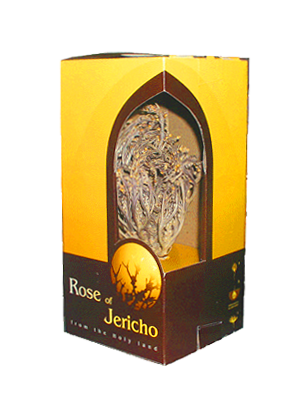
Because the true Rose of Jericho does not have an active root system when purchased in its dried state, it does not require soil, pots, or complex drainage systems. To display it, you simply need a shallow decorative dish, bowl, or tray made of glass, ceramic, or stone.
The vessel should be wide enough to accommodate the plant once it fully unfolds, which can sometimes double or triple its dried diameter. For an aesthetic touch, many homeowners line the bottom of the dish with smooth river stones, decorative pebbles, or crystals, allowing the base of the plant to sit slightly above the water level, absorbing moisture without becoming waterlogged.
Step-by-Step Activation and Care Protocol
Activating your Rose of Jericho is a simple but magical process that serves as a wonderful activity for children and plant lovers alike:
-
Rinse: Gently rinse the dried plant under cool tap water to remove any residual desert sand, dust, or loose twigs.
-
Water Placement: Fill your chosen dish with room-temperature water. Avoid using boiling or excessively hot water, as this can damage the plant’s cellular fibers.
-
Observation: Place the dry ball into the water, ensuring the base is submerged. Within a few hours, the outer branches will begin to spread outward. The full opening process typically takes between 12 to 24 hours.
-
Maintenance: Change the water every single day to prevent stagnation and discourage the growth of bacteria or algae. Keep the display in an area with indirect sunlight and good air circulation.
The Crucial Drying Period
The most common mistake owners make is keeping the Rose of Jericho in water indefinitely. Unlike typical houseplants, Anastatica hierochuntica is a desert native that requires a dry cycle to maintain its structural integrity.
After letting it stay open for about 5 to 7 days, remove it from the water completely. Place it on a paper towel in a well-ventilated area and watch it slowly curl back into its spherical, brown form over the next day or two. Store it in a dry closet or keep it on display as a rustic sculptural element. Allow it to rest for at least two weeks before reviving it again.
Questions & Answers
-
Question: Why is my Rose of Jericho turning brown or smelling bad?
-
Answer: True Anastatica hierochuntica is naturally brown and woody even when open. However, if it smells bad, it means the water was not changed frequently enough, or it has been left in water too long and is starting to rot.
-
-
Question: Does the Rose of Jericho need fertilizer?
-
Answer: No, the plant does not require any fertilizer or nutrients, as its opening mechanism is purely physical rather than metabolic.
-


